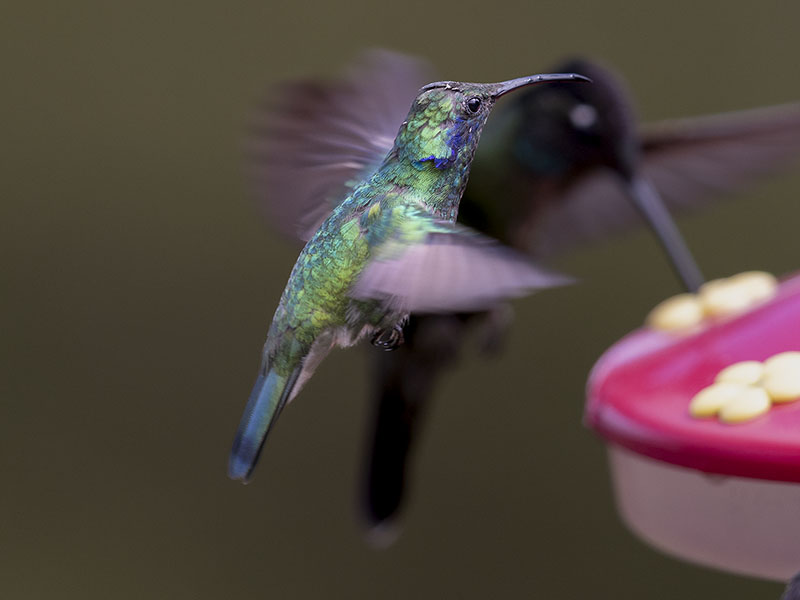
Red Car Theory
For the better part of two decades, Colorado was my home. It's where I became a seasoned backpacker, pushing ever deeper into the remote folds of the Rockies on a constant search for routes where I would encounter no other human for the entire duration of my trip. Those trips yielded their share of 'wilderness' encounters. In the Gore Range, a sow black bear charged me through a stand of pines, her jaws popping while her cubs scrambled for the safety of tree trunks (thankfully she stopped and turned back, as I had nowhere to run or hide) . I've listened to the bugle of bull elk on a crisp autumn morning in the Sawatch Range, their guttural calls echoing as mist rose from the alpine meadows. And once, on a snowy, winter hike in the Holy Cross Wilderness, I woke to a chilling discovery: mountain lion tracks circling my tent ( prudence dictated an immediate trudge back to the trailhead). These moments, and countless others, remain indelible memories from the hundreds of miles collected during those years.
But for all the spectacular wildlife I saw, I never once saw a Hummingbird.
It simply never registered that such a creature could be present in this rugged landscape. Neither do I recollect ever seeing this bird in city trails and parks, home to chickadees, nutcrackers, jays, woodpeckers and warblers. It was only years later, after I’d left Colorado for Southern California and officially donned the title of ‘birder’, that I learned of the Broad-tailed Hummingbird, a bird of the very mountains that I had tramped. Surely, I told myself, I must have encountered this hummingbird, even if it was a fleeting glimpse or a blur of wings, but despite sifting through my memories over and over, I truly do not believe I ever 'saw' this bird.
It was a humbling re-calibration of my past, exposing a profound gap in my perception and observation of the wilderness around me. What does it say about us, that we say we can walk mindfully in nature, inhale its presence and yet miss such miniature marvels.
That our attention is primed by not what there is to see but what we are prepared to see.
Now, of course, that I have this knowledge, on our visits back to the Front Range, I find myself a man somewhat obsessed in photographing this bird, scanning every columbine bloom, loitering near front porch hummingbird feeders, listening for trilling sounds, waiting for a good, clean opportunity to photograph a bird that was there all along.
But little did I know about my own limits to my obsession with photographing hummingbirds as it was all put to the test in the vibrant cloud forests of Costa Rica.
Sugar Water, Captured Pixels
Still processing the morning's sanctified encounter with the Resplendent Quetzal we settled into the lobby of Paraiso Quetzal to wait out our next Quetzal adventure, this one promising a Quetzal at its nest. Adjacent to the lobby was an elevated platform with hummingbird feeders stationed at corners and an accoutrement of pipes holding flower adorned branches. There was a frenzied spectacle motion as dozens of hummingbirds of different species, but mostly Fiery-Throated Hummingbirds jostled over feeder stations and the assembled tubular flowers. I had seen online videos of these shimmering clouds of hummingbirds but no video could match what it was to witness it in person.
What was it really like? This video portrays the energy around the feeder. Hummingbirds arriving from all directions. The bigger hummingbirds (Talamanca) hovered directly over the feeder port while the Fiery-Throated desperately wheeled their tiny feet to get any purchase on the feeder (for some reason the perching platforms on the feeders had been removed). What sounds like gusts of windswept rain is in fact the sounds of their wings. Just insane. Caution - if you are not on Wi-Fi - the video is about 100MB. The web browser will not download the video until you press the play button.
So how does one photograph this vortex of color and motion? That's a good question and I set out to see what my camera could capture and it was a harder endeavor than I would have imagined. The question wasn’t what to photograph, but how to isolate a single, coherent moment from the chaos. By the time the autofocus locked, the subject was gone, replaced by another, or obscured by a blur of wings or a body. My fingers worked furiously in a sequence of depressing, then releasing the autofocus, while simultaneously smashing the shutter button for a burst of photos. Within a few minutes I had captured about a hundred photos.
A quick glance at the playback confirmed that most of the images where technically fine, plenty of sharp captures of hummingbirds in hover or perched hummingbirds on the feeder, but lacking the emotional appeal of the sublime. In most of the photos there was the feeder - a plastic and metal object that intruded the frame and gave the image a banal reality of a transaction. The images felt like acquisitions, not revelations, and only possible because of my modern camera equipment that could wield dozens of tack sharp photos in mere seconds.
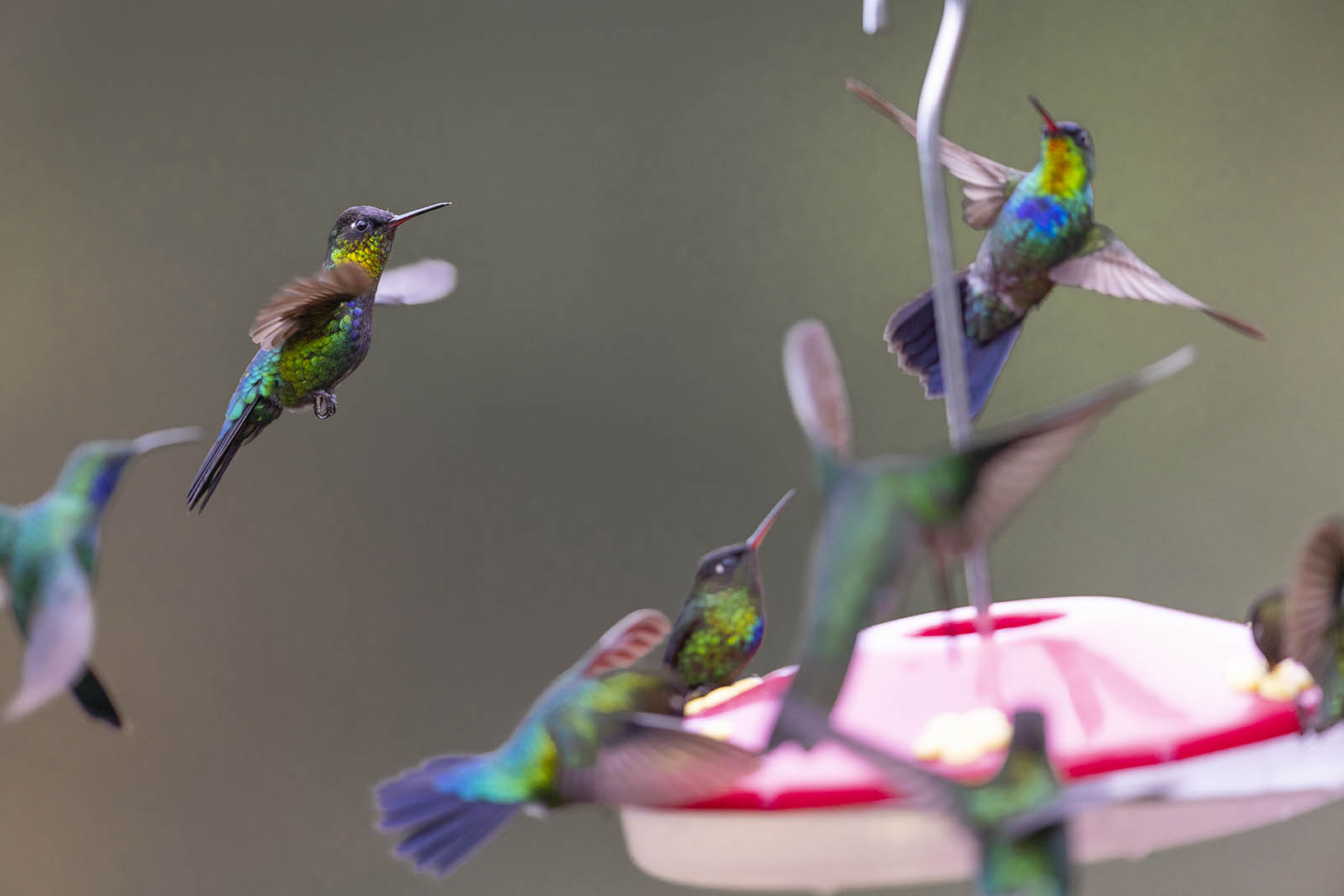
 Air traffic!
A Fiery-Throat hummingbird looks for a landing spot as others (a Lesser Violetear, other Fiery-Throated
and a Talamanca) hummingbirds are arriving and departing.
Air traffic!
A Fiery-Throat hummingbird looks for a landing spot as others (a Lesser Violetear, other Fiery-Throated
and a Talamanca) hummingbirds are arriving and departing.
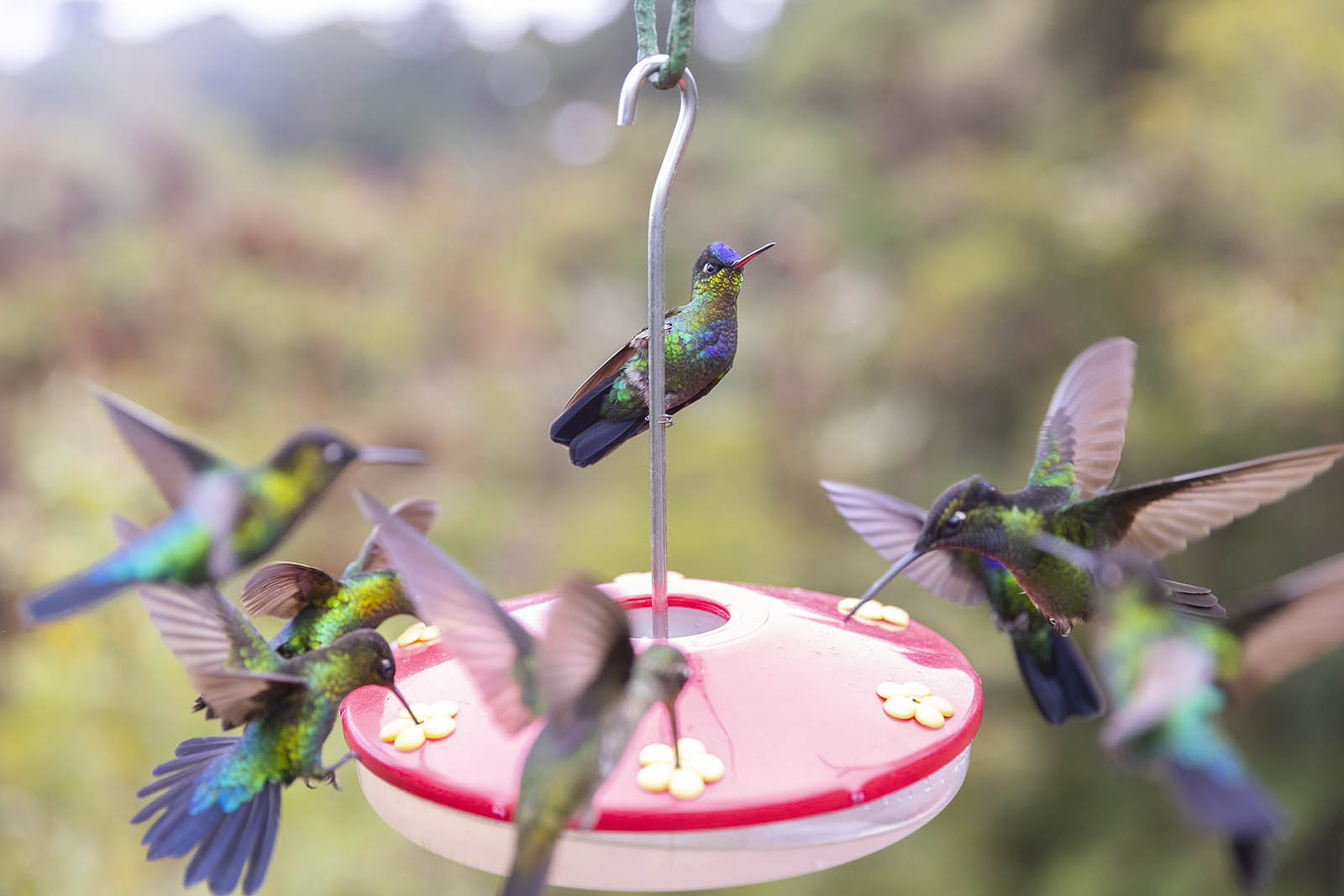 A Fiery-Throat
takes stock of the frenzy by grabbing the feeder pole. I saw a Fiery-Throat do this several times
and who knows, it might have been the same bird !
A Fiery-Throat
takes stock of the frenzy by grabbing the feeder pole. I saw a Fiery-Throat do this several times
and who knows, it might have been the same bird !
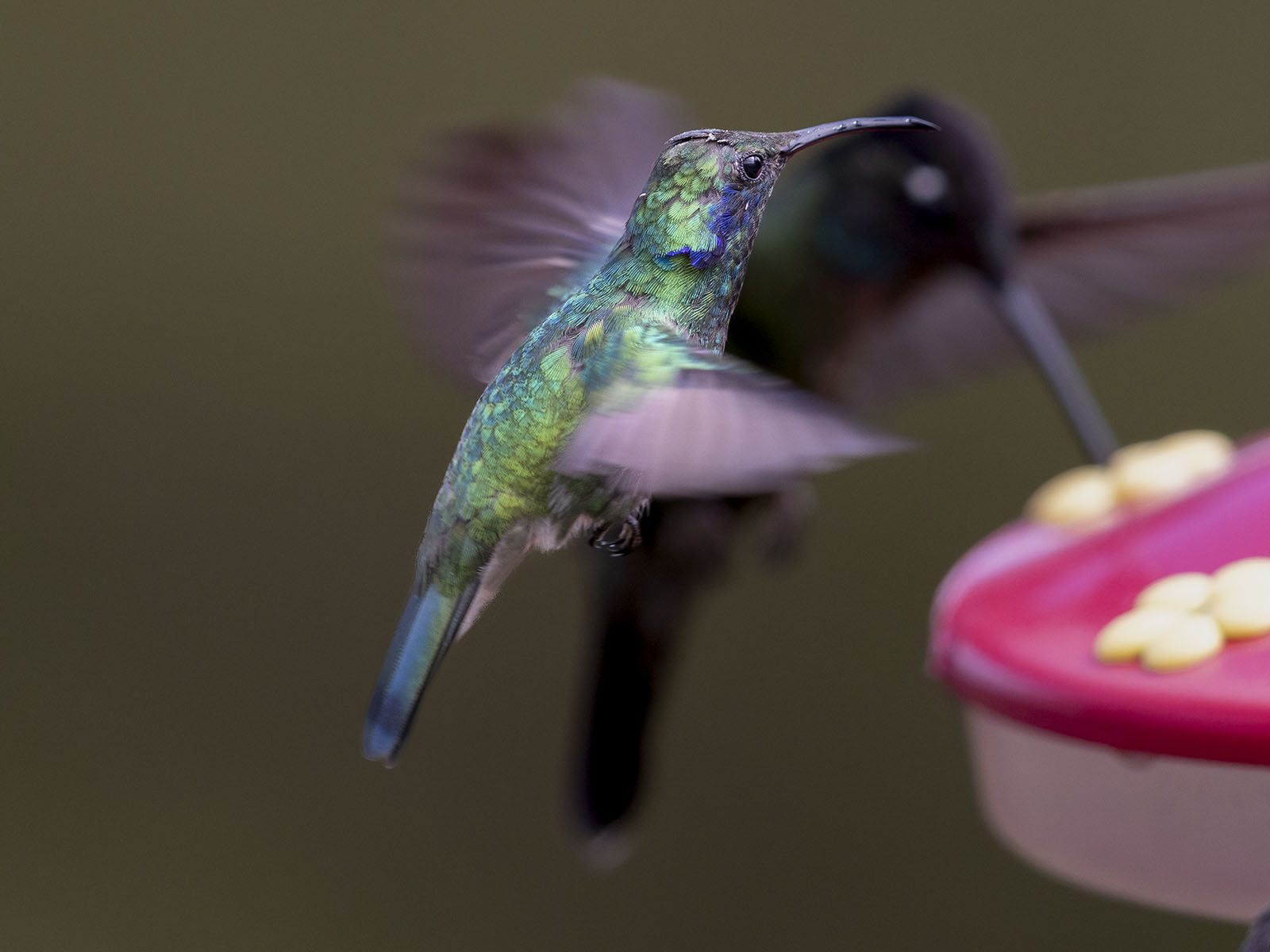 A Lesser VioletEar
had a bent beak tip, a possibly casualty of a mid-air collision?
A Lesser VioletEar
had a bent beak tip, a possibly casualty of a mid-air collision?
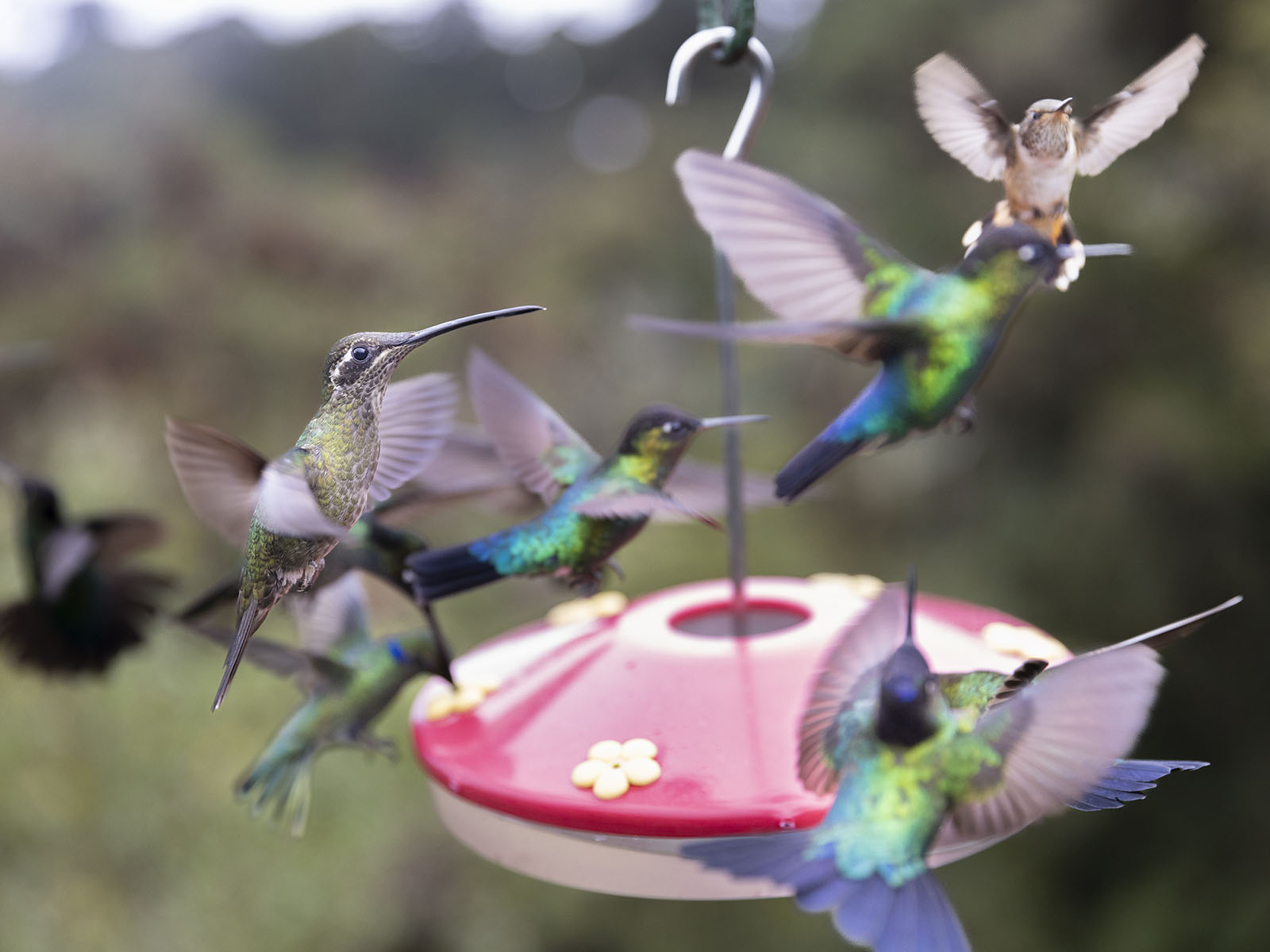 A female Talamanca
arrives and in the upper right corner, we have a new entrant - a male Volcano Hummingbird
that looked very hesitant to join the frenzy.
A female Talamanca
arrives and in the upper right corner, we have a new entrant - a male Volcano Hummingbird
that looked very hesitant to join the frenzy.
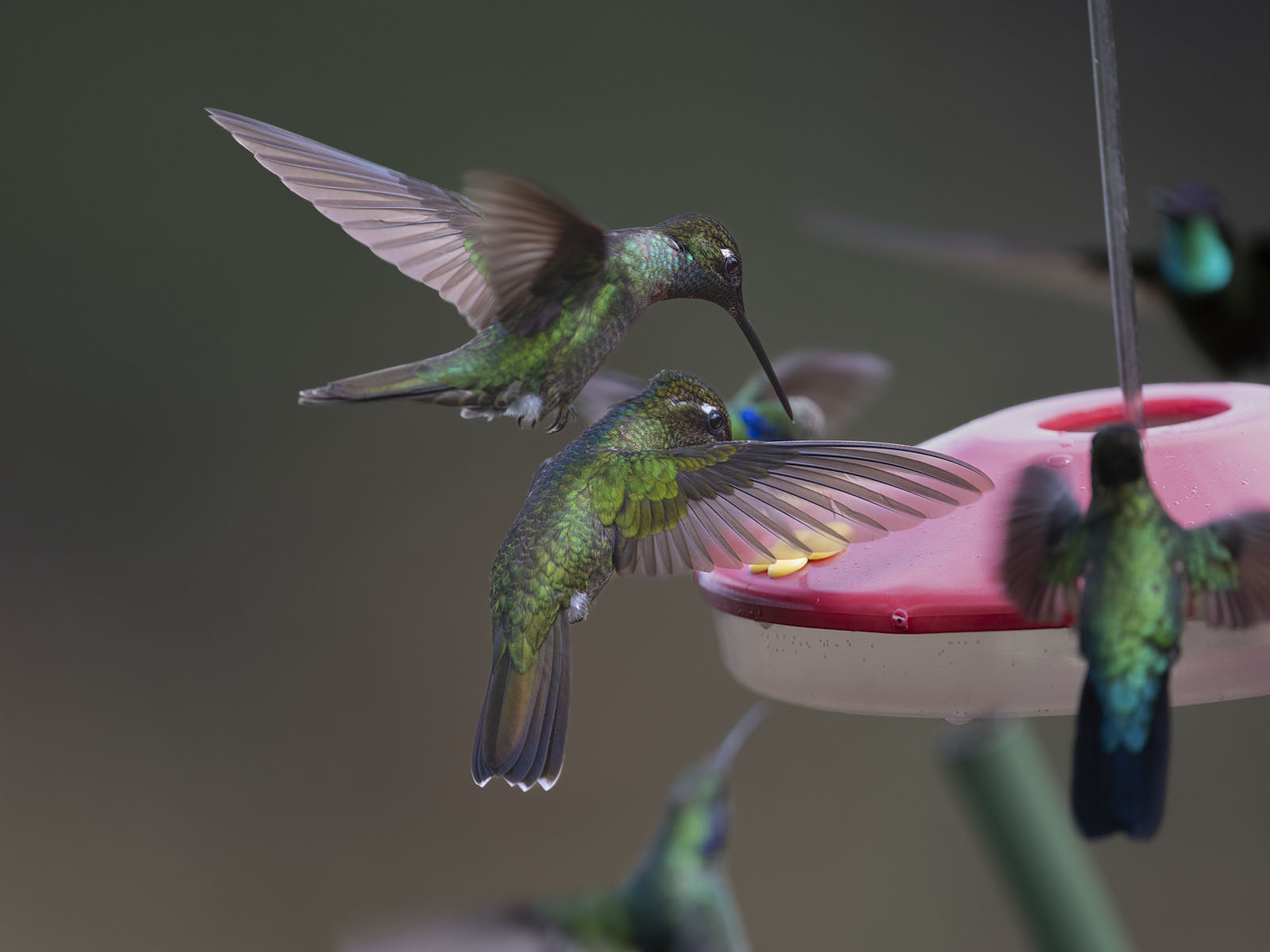 Is the Talamanca
hummingbird hovering above the one at the feeder port - going for the same feeder port ?! ..
Well, yes, in the subsequent frames
captured these
two birds incredibly locked their beaks into the same port ! Unfortunately those frames are not as tack
sharp as this one, else I would have posted them here. Incredibly their wings did not clash. The whole
sequence was no more than perhaps two seconds.
Is the Talamanca
hummingbird hovering above the one at the feeder port - going for the same feeder port ?! ..
Well, yes, in the subsequent frames
captured these
two birds incredibly locked their beaks into the same port ! Unfortunately those frames are not as tack
sharp as this one, else I would have posted them here. Incredibly their wings did not clash. The whole
sequence was no more than perhaps two seconds.
But I was not alone in this manic enterprise. Besides me were other photographers with their long lenses, also trained at the feeders, quite possibly shooting a very similar set of images. I could recognize the camera make by the fusillade emitted by the mechanical shutters - a Sony here, a Canon there. Something felt a bit off in this experience. What exactly was I photographing?
And then, as if it had read my thoughts, a single Fiery-Throat detached itself from the chaos. Drawn perhaps to my bright red beanie. I did not see the bird arrive as I was fully engrossed in the viewfinder. It stopped, hovering a mere inch from my right cheek. I froze in place, my finger still on the shutter, and lowered my eyes. I could feel the cool displacement of air from its wings, the low pitched buzzing sound as it continued to hover in place - stillness and motion, all in one.
It was a moment of pure, unmediated presence, lasting no more than a few seconds. It was intimate, un-photographable, and entirely mine. Weeks and months after this experience, when I close my eyes, I can still feel the ghost of its wings moving against my right cheek. Of the hundreds of images I captured that day of hummingbirds, the visitation that I received - that image that I imagined of the hummingbird hovering next to my cheek — became the memory that mattered.
I decided to leave the platform and its feeders and walk around the grounds. Just as I was leaving, I caught a glint of green from the corner of my eye. There, on the metal grid platform, a A Fiery-Throat sat in stillness. My first thought was : What was it doing here? This area of the platform was an active platform for people, the resting bird was an anomaly. It did not look injured, perhaps all the energy of the day had exhausted over it. A sense of duty kicks in and I stand guard over the bird. I take a few photos and this catches the eye of another photographer who is curious to my action. He came closer and bent low for a closer look, as if he wanted to take a macro photo with his camera. I get it, its a familiar impulse, and the bird was tantalizingly approachable. This might have started the bird from it reverie, because it launched into the air and was gone. Ok, at least it was not injured.
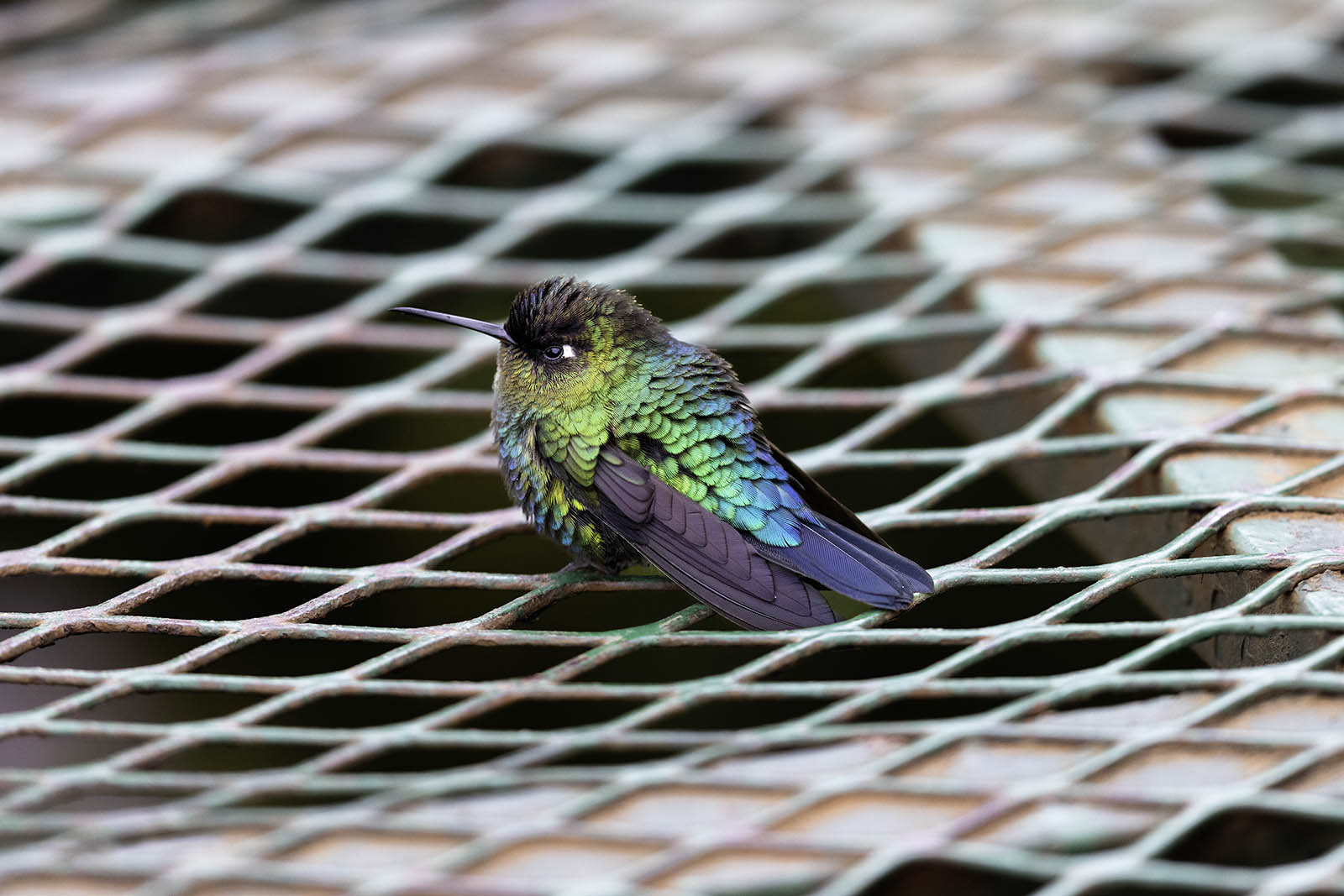 Even high energy
hummingbirds need to take a breather !
Even high energy
hummingbirds need to take a breather !
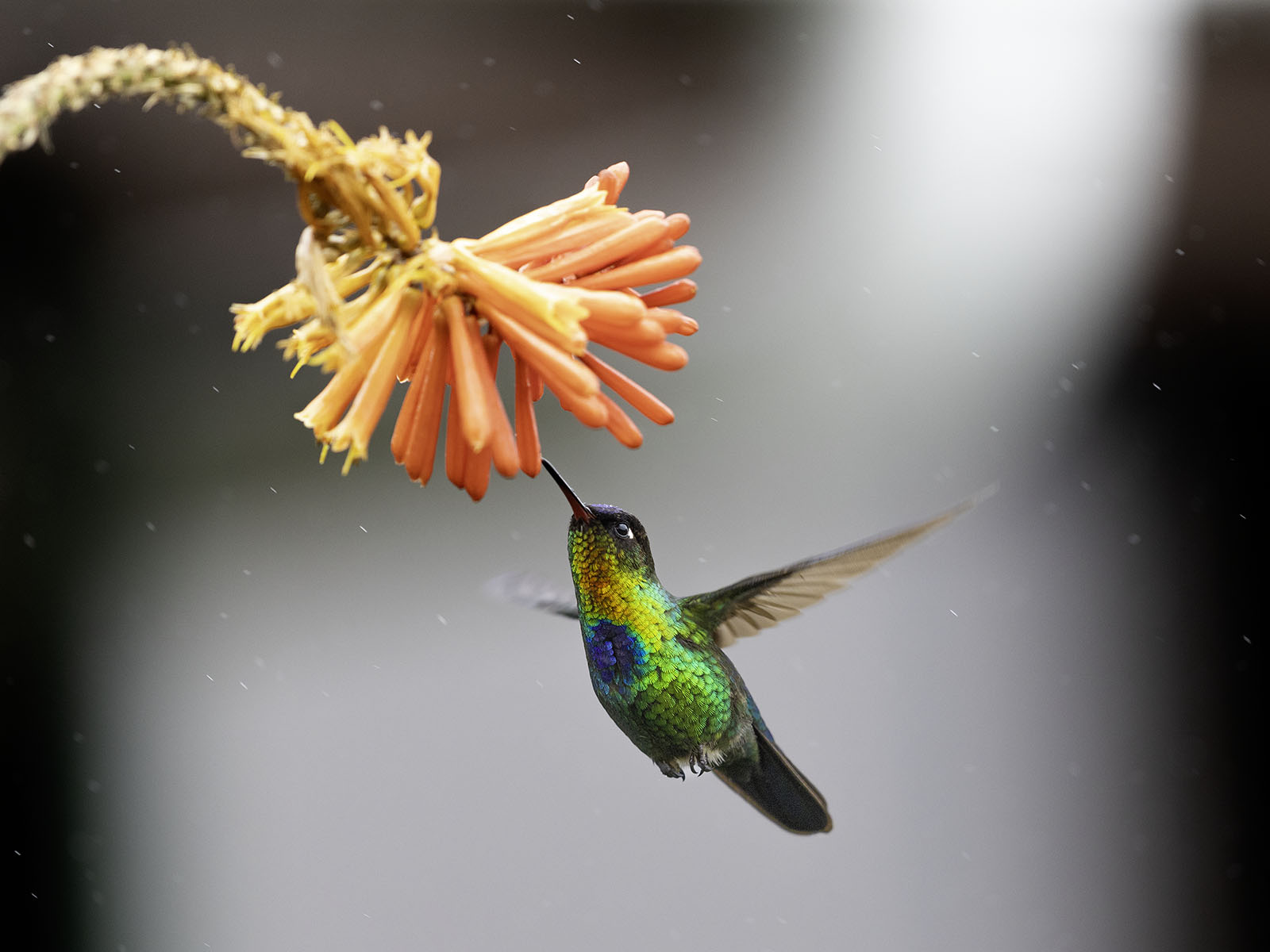 Single flower
stems arranged
around the platform were other opportunities to photograph hummingbirds.
Single flower
stems arranged
around the platform were other opportunities to photograph hummingbirds.
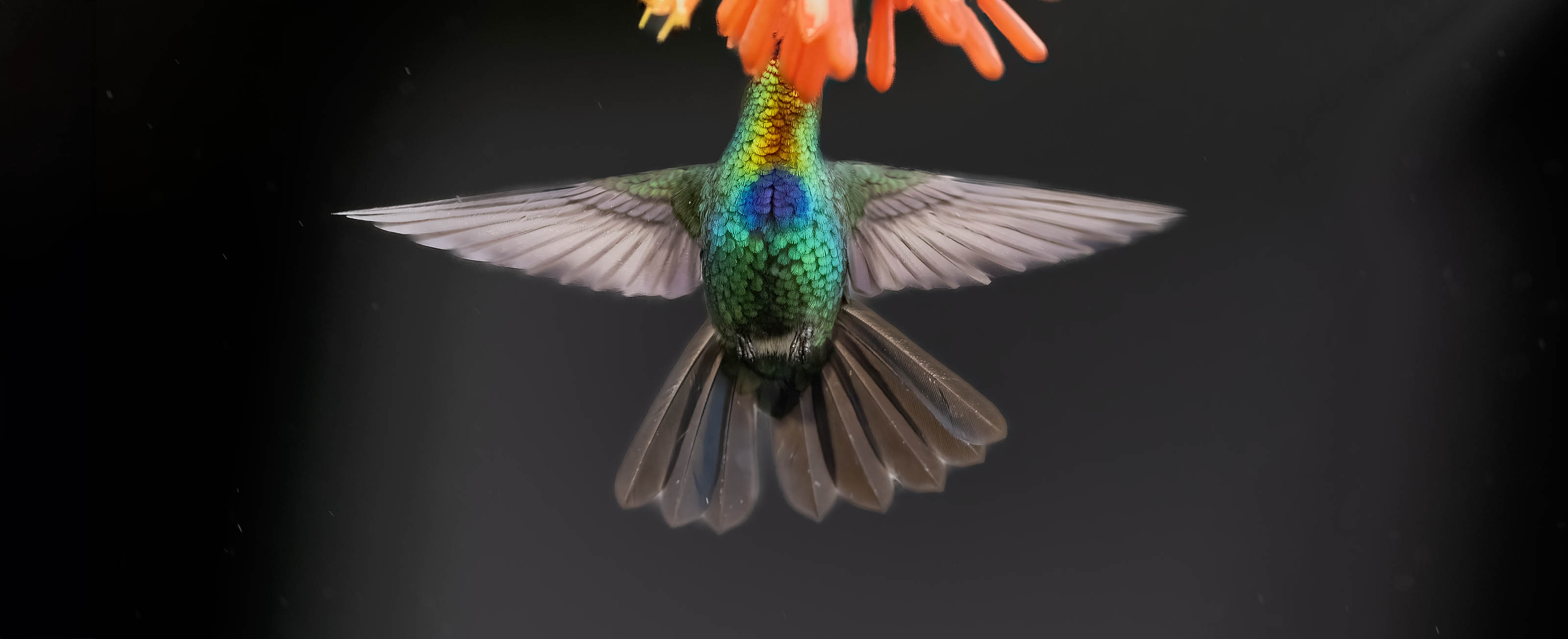
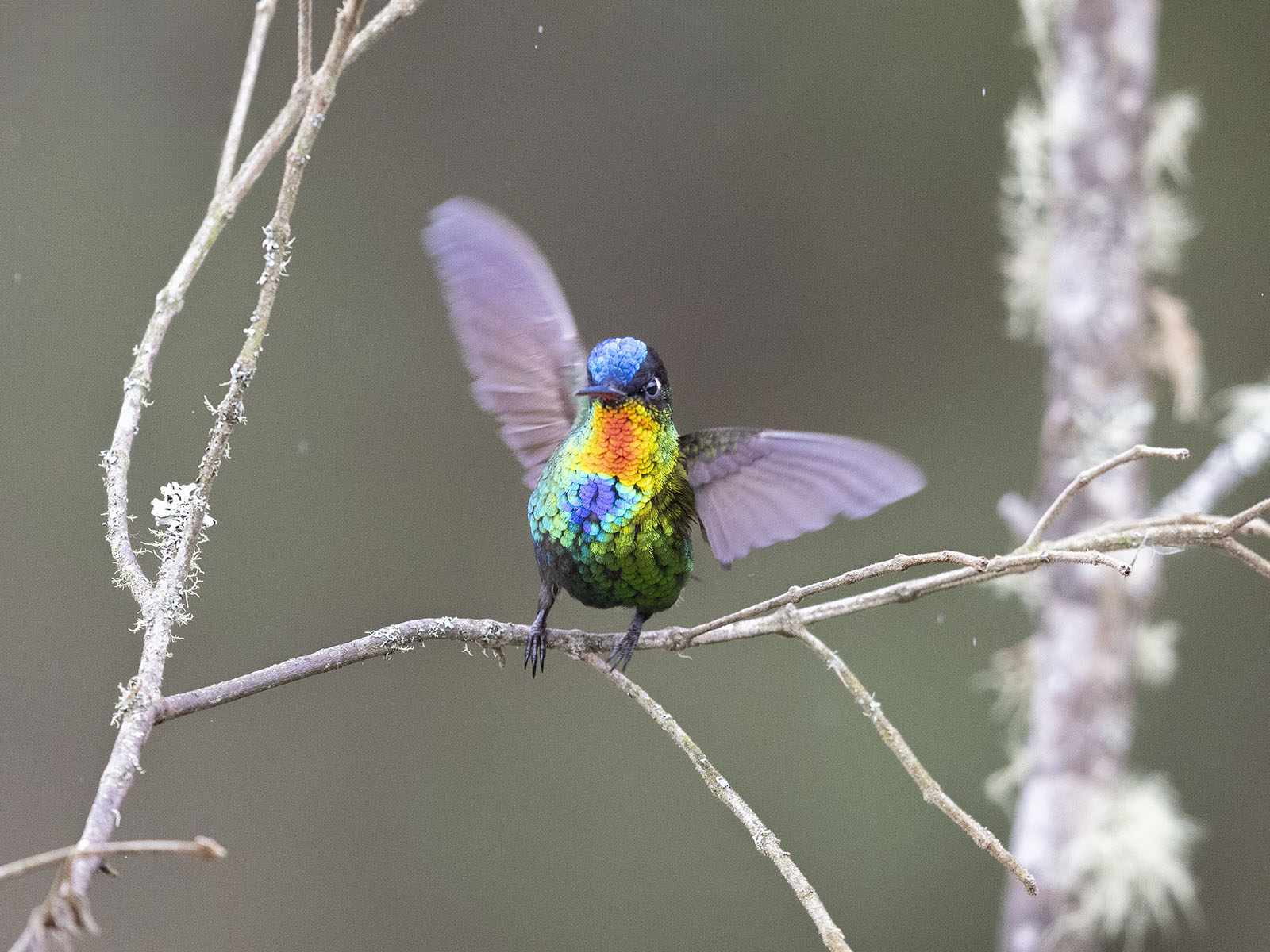 A Fiery-Throat
displays the colors of the rainbow.
A Fiery-Throat
displays the colors of the rainbow.
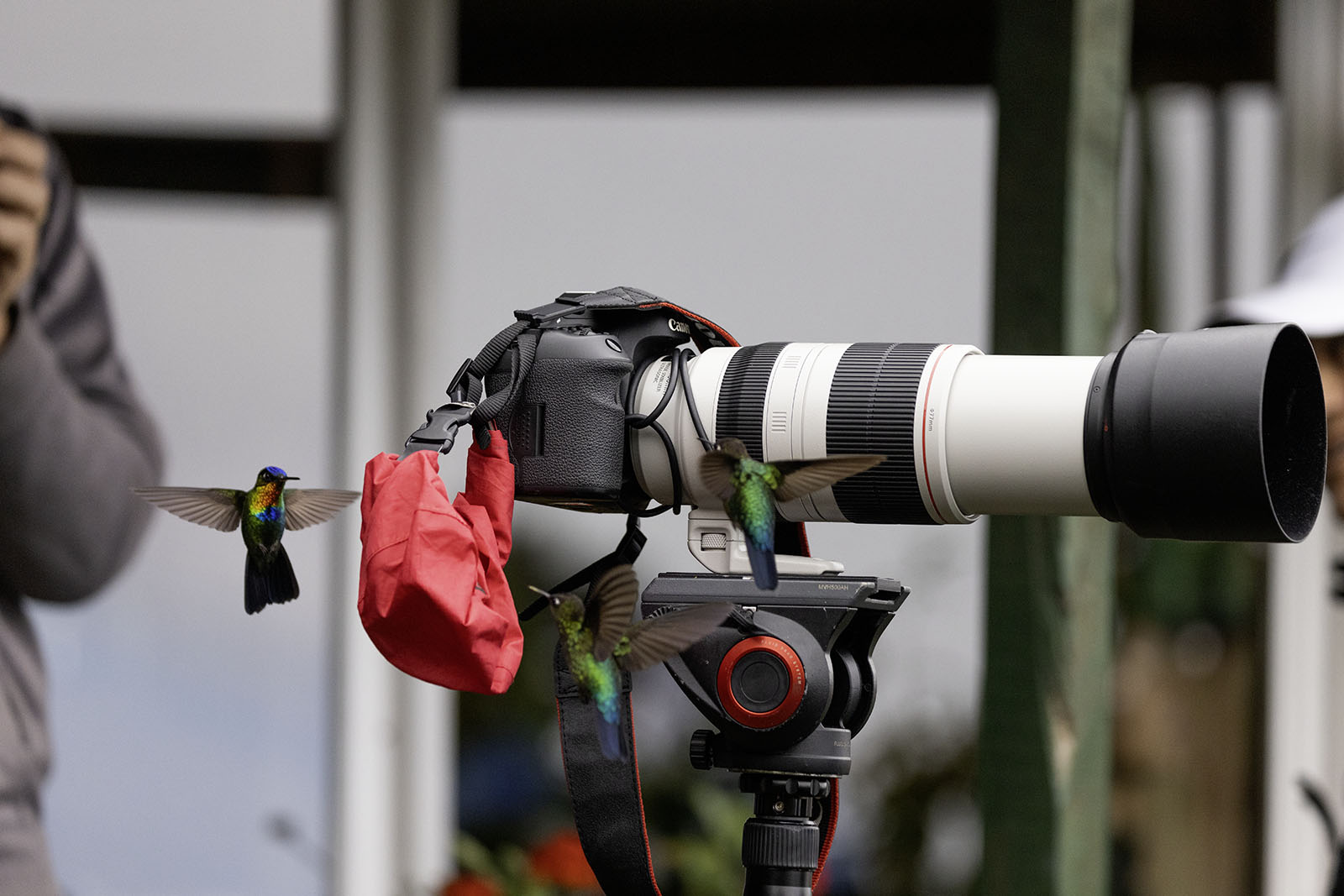 One of the
photographers had a red bag hooked to the camera body, drawing the attention of Fiery-Throat
hummingbirds, like moths to a flame.
One of the
photographers had a red bag hooked to the camera body, drawing the attention of Fiery-Throat
hummingbirds, like moths to a flame.
I took hundreds more hummingbird photos that day, jostling with photographers at the platform to take photos of hummingbirds jostling at the feeders and flowers, incessantly chirping to each other, always active, always high energy. But by the end of an hour my own energy had been spent, and I finally retreated to the inviting quiet of the lodge, where I found my brother resting on the lobby's couch.
Meditations
Hummingbird photography was meant for the modern digital camera. If, as Susan Sontag suggested, photography
can be an act of sublime acquisition, then the hummingbird is its ultimate prize. The bird exists as a
vibration, as a living paradox - a miniature object of intense energy that defies gravity.
The digital camera, with its silent, rapid-fire electronic shutter and processing power that allows for
acute focus tracking, becomes an extension of our senses. The camera dissects time, giving us a view into
the moments of a hummingbird's flight that our own senses are too slow to grasp.
I feel this is the heart of our obsession with photographing hummingbirds.
We are captivated by hummingbirds because
they represent a beauty that exists at the very edge of our perceptual limits and each frozen frame,
as Roland Barthes might say, is a certificate that "that-has-been" — proof of the
incredible flight dynamics of the hummingbird.
We photograph them so intensely because we need to prove to ourselves that
a thing so magical is, in fact, real.